Stop Feeding the Charizard Machine: How Kanto Obsession Is Quietly Killing Pokémon's Future
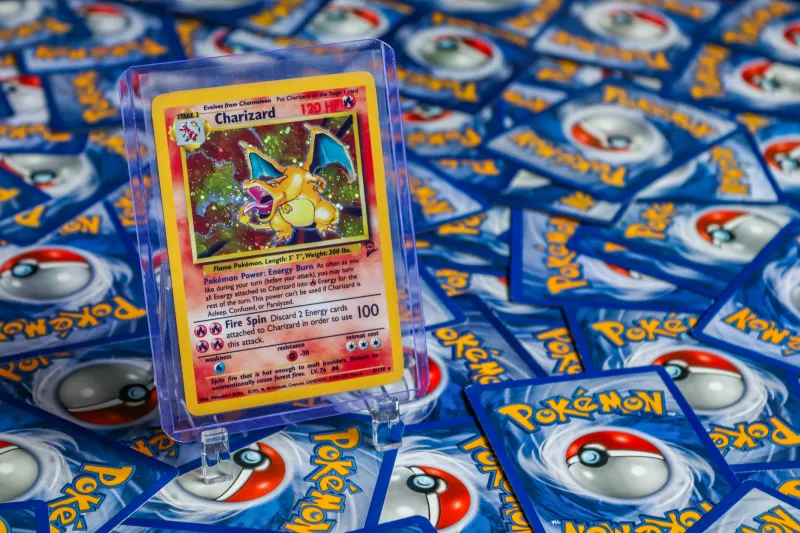
Let's be honest for a second. If you walked into a Target today and tried to find merchandise for, say, Inteleon or Dragapult — two legitimately cool Pokémon from a relatively recent generation — you'd probably come up empty. But Charizard? There's an entire aisle waiting for you. Maybe two.
That's not an accident. It's a business strategy. And while it makes short-term financial sense, there's a growing argument that The Pokémon Company's relentless Kanto pandering is actively working against the long-term health of a franchise that's supposed to be about discovery, wonder, and — of all things — catching 'em all.
The Numbers Game Nobody Wants to Talk About
Here's a wild stat to sit with: Pokémon currently has over 1,000 species across nine generations. One thousand. And yet, if you look at the anime's promotional materials, the video game marketing pushes, and the merchandise lineups, you'd be forgiven for thinking the franchise peaked somewhere around 1998 and has been in a holding pattern ever since.
The original 151 Pokémon represent roughly 15% of the total roster. But they occupy something closer to 60 or 70% of the franchise's cultural real estate — at least in terms of what gets pushed to casual audiences in the US. That imbalance doesn't happen by accident. It's the result of years of calculated decisions by executives who've convinced themselves that Kanto is the only language non-hardcore fans speak.
The problem? That assumption gets more outdated every single year.
Who Exactly Is This For?
Here's where the generational math gets complicated. Kids who grew up with the original Red and Blue games are now in their 30s and early 40s. They're nostalgic, sure — but they're also not the primary demographic driving Pokémon's future. The kids watching the anime today, playing Scarlet and Violet, collecting the cards? Many of them have zero emotional attachment to Kanto. Pikachu is just a yellow mouse to them. Charizard is just some dragon that older people won't stop talking about.
When The Pokémon Company leans hard on Gen 1 callbacks — whether that's the endless Mewtwo revivals, the Kanto-heavy episodes shoehorned into newer anime seasons, or the fact that Pikachu is still somehow the face of everything — it's essentially prioritizing nostalgia for a shrinking demographic over genuine connection with a growing one.
That's a slow-motion problem. It doesn't blow up overnight. But it erodes something real.
The Anime Has Tried — And Then Retreated
To be fair, there have been genuine attempts to break the cycle. Pokémon Horizons, which shifted focus away from Ash entirely and introduced new protagonists Liko and Roy, felt like a genuine creative reset. New regions, new characters, new dynamics. Fans who stuck with it largely found it refreshing.
But even there, the gravitational pull of Kanto nostalgia is hard to escape. Legacy characters get cameos. Familiar Pokémon get featured prominently. It's as if the creative teams get permission to try something new — but only if they keep one hand firmly on the safety rope of what came before.
Compare that to how other long-running anime franchises handle evolution. One Piece doesn't constantly flash back to East Blue to reassure viewers that yes, this is still the same show. Naruto built on its mythology without requiring every arc to genuflect at the altar of the original Village Hidden in the Leaves. Pokémon, by contrast, seems genuinely afraid of what happens if it lets go.
What Game Freak Keeps Getting Wrong
The video games tell a similar story. Pokémon Let's Go was essentially a full-budget nostalgia delivery system aimed squarely at lapsed fans and their wallets. The Kanto remakes have been some of the best-selling entries in the franchise's history — which, from a pure business standpoint, validates the strategy completely.
But here's the thing: nostalgia bait works once, maybe twice, before it starts feeling cynical. At some point, newer players — the ones who started with Sun and Moon, or Sword and Shield, or Scarlet and Violet — deserve the same treatment. They deserve to see their starters get the same cultural saturation, their regions get the same reverence, their favorite Pokémon get the same merchandise shelf space.
Right now, that's not happening. And the resentment is quietly building in fan communities.
The Opportunity Cost Is Real
Every time the franchise doubles down on Kanto, it's making an implicit choice to under-invest somewhere else. Johto has one of the richest mythologies in the entire series — Ho-Oh, Lugia, the legendary beasts — and it's perpetually treated like the franchise's forgotten middle child. Unova had genuinely ambitious storytelling and some of the most creative Pokémon designs ever produced. Kalos was visually stunning and introduced mega evolutions that fans still love. All of them exist in the shadow of a fire-breathing lizard and a cartoon mouse.
The creative potential sitting in those later generations is enormous. The fan enthusiasm is there. The only thing missing is the corporate willingness to bet on it.
What a Real Fix Would Look Like
This isn't a call to erase Kanto or retire Charizard. That would be overcorrecting in the other direction, and it would alienate a massive chunk of the fanbase for no good reason. The original 151 are genuinely iconic, and there's nothing wrong with celebrating that.
But celebration is different from dependency. The Pokémon Company could start by committing to merchandise diversity that actually reflects the full breadth of the franchise. The anime could build new storylines that don't require old-guard cameos to feel legitimate. Game Freak could stop treating every Kanto remake like a guaranteed safe harbor and start trusting that fans who fell in love with Galar or Paldea want that same love returned.
The franchise has built something extraordinary over the past 25-plus years. All nine generations of it. It's time to act like it.