The Pokémon Nobody Saw Coming (And the Ones Nobody Saw at All): A Regional Anime Snub Breakdown

Here's a question that should bother you more than it probably does: Unova introduced 156 new Pokémon. The Black & White anime ran for multiple seasons. And yet, if you actually sit down and count how many of those creatures got meaningful screen time — not just a background cameo or a two-second wild encounter — the number is kind of embarrassing.
This isn't a new problem. It's been baked into how the Pokémon anime works since the very beginning. But as the franchise has grown and the regional Pokédexes have ballooned in size, the gap between "Pokémon that exist" and "Pokémon that matter" has gotten harder to ignore.
So what's actually going on? Why does the anime consistently leave so many creatures on the bench — and why are some of the snubs so genuinely strange?
The Numbers Don't Lie (And They're Kind of Wild)
Let's start with some rough math. Kalos introduced 72 new Pokémon. The XY anime ran for 93 episodes plus movies. That sounds like plenty of time to work through the regional roster, right? But a significant chunk of Kalos Pokémon — especially mid-tier evolutionary lines that weren't tied to a gym badge or a major character — barely registered as background noise.
Alola is even more interesting. Sun & Moon leaned hard into a slice-of-life format that theoretically gave the show more breathing room to just... let Pokémon exist in the world. And in some ways it delivered. But plenty of Alolan forms and new additions still got weirdly minimal treatment, while a handful of Pokémon (Rowlet, we're looking at you) got so much love it bordered on parody.
The pattern holds across every region: a small group of creatures gets elevated to recurring character status or major battle fodder, a slightly larger group shows up in one or two episodes, and a surprisingly large chunk just... doesn't really appear.
Popularity, Merchandise, and the Invisible Hand
Here's where the fan theories get interesting — and honestly, where the real-world logic kicks in hard.
The Pokémon anime isn't just a TV show. It's a promotional engine. Every season is, at least partly, designed to drive interest in the games, the trading cards, and the merchandise. That means the creatures most likely to get screen time are the ones that are already popular, the ones that are being pushed in marketing, or the ones attached to a toy or card that needs selling.
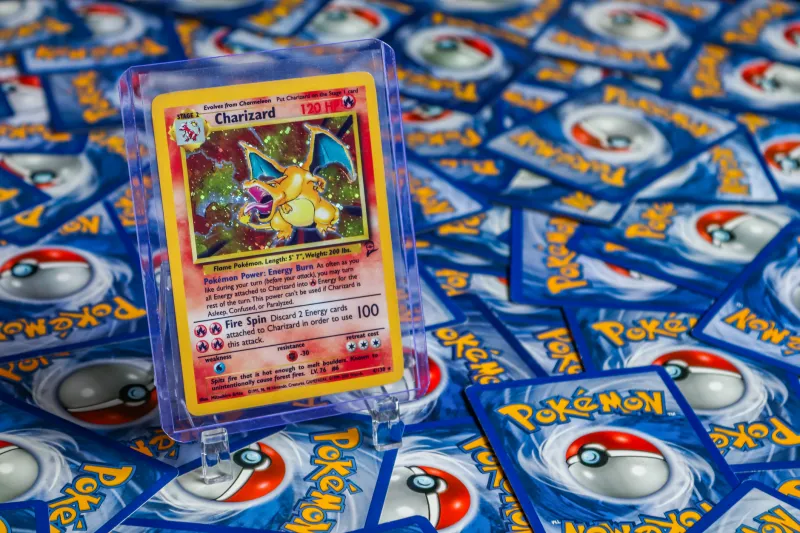
This explains a lot. Charizard's absurd overrepresentation makes more sense when you remember how many Charizard products have been on shelves for 25 years. Lucario showing up in seemingly every other Pokémon movie isn't a coincidence — Lucario is a merchandising juggernaut. The anime follows the money, even when it doesn't follow the Pokédex.
But this logic also creates some genuinely bizarre gaps. There are Pokémon that are fan favorites, that have interesting designs, that would slot naturally into stories — and they just never show up. Farigiraf got almost nothing in the Scarlet & Violet anime era despite being a legitimately cool evolution. Plenty of Johto Pokémon are still waiting for a real moment in the sun despite Gold & Silver being nearly 25 years old at this point.
Production Constraints Are Doing More Work Than You'd Think
Beyond merchandising, there's a more mundane reason some Pokémon get left behind: it's expensive and time-consuming to design, animate, and voice-direct creatures that aren't central to the plot.
Every Pokémon that appears in the anime needs to be modeled for the specific animation style of that era, needs sound effects, and — if it speaks — needs a voice performance. Background Pokémon can get away with less, but anything with a real scene requires real production resources.
This creates a natural selection pressure toward Pokémon that can pull double duty. A Pokémon that's central to a gym leader's team, or that a main character catches, justifies the production investment. A Pokémon that would theoretically appear in one Route 4 equivalent scene... might just not make the cut when the production schedule is tight.
Fans who've done deep dives into which Pokémon appear in which episodes have noted that the anime tends to recycle a relatively small pool of "background" Pokémon — mostly from the original 151 — rather than continually introducing new ones. It's cheaper, the designs are already optimized for animation, and American audiences recognize them.
The Johto Problem (And Why It Haunts Every Generation After)
If you want to understand just how deep the snub problem goes, look at Johto. The Gold & Silver games introduced some of the most beloved Pokémon in the franchise's history. And the Johto anime... kind of fumbled a lot of them.
The original Johto seasons were famously slow-paced, and a significant chunk of screen time went to Kanto Pokémon that Ash and his team already had established relationships with. New Johto creatures often got one-episode spotlights that felt more like promotional checkboxes than genuine storytelling.
The ripple effect is that some Johto Pokémon have never really recovered in terms of anime presence. They didn't get a strong debut, they didn't get revisited in later seasons, and they've kind of just... existed in the background of the franchise ever since.
The Fan Favorite Exemption (And Why It Doesn't Always Kick In)
You'd think that if a Pokémon is beloved enough by fans, the anime would eventually find a way to give it a proper moment. Sometimes that's true. Gengar finally got a real arc. Dragonite had a genuinely touching episode in Journeys. The franchise occasionally course-corrects.
But plenty of fan favorites are still waiting. Flygon has one of the most devoted fanbases in the entire franchise and has been notably underserved by the anime for decades. Haxorus showed up in the BW era but never quite got the treatment its design deserved. The list goes on.
The frustrating reality is that fan enthusiasm doesn't automatically translate to anime presence. It has to intersect with production timing, marketing priorities, and the specific story a given season is trying to tell. When all those things align, you get something great. When they don't, another fan favorite spends another year waiting.
What This Means for Horizons and Beyond
Pokémon Horizons has shown some genuine willingness to let new and unexpected Pokémon take center stage. The new cast's team choices have been refreshingly non-obvious, and the show seems at least somewhat interested in exploring corners of the Pokédex that previous series ignored.
But the structural pressures haven't gone away. Merchandise still matters. Production budgets are still finite. And with Scarlet & Violet's roster being as large as it is, the math problem of "too many Pokémon, not enough episodes" isn't going anywhere.
For now, fans will keep watching — and keep keeping mental tallies of which creatures got left behind. It's basically a tradition at this point.